
The Real Pros and Cons of PEX vs Copper Pipes for Salt Lake City Homes
Choosing between PEX and copper pipes in Salt Lake City means weighing freeze resistance against longevity in hard water conditions. PEX flexes with Utah’s extreme temperature swings and resists mineral buildup, while copper offers proven durability but requires more careful installation to prevent pinhole leaks in our mineral-rich water. Your decision impacts both upfront costs and long-term maintenance for your home. Best Water Softener Installation Services in Salt Lake City to Fight Hard Water.
PEX Plumbing: Modern Flexibility for SLC’s Climate
PEX (cross-linked polyethylene) has become the go-to choice for new construction throughout the Salt Lake Valley. The material’s flexibility allows it to expand slightly when water freezes, reducing burst pipe risks during our harsh winter months when temperatures regularly drop below zero. Water Main Leak Detection and Repair in Holladay.
Local plumbers report that PEX installation typically costs 40-50% less than copper in Salt Lake County. A 2,000-square-foot home repipe averages $4,500-$6,500 with PEX versus $8,000-$12,000 for copper. The savings come from faster installation since PEX requires fewer fittings and no soldering.
However, PEX has limitations. It cannot be used outdoors or in direct sunlight as UV rays degrade the material within months. Some homeowners also worry about potential chemical leaching, though current PEX formulations meet all EPA standards for potable water. EPA drinking water standards.
Golden Nugget: Salt Lake City’s water hardness averages 13-15 grains per gallon, higher than the national average of 7-8 grains. This mineral content accelerates scale buildup in copper pipes but has minimal effect on PEX tubing. Water Stains on Ceiling or Walls.

Diagram comparing PEX-A, PEX-B, and PEX-C manufacturing processes showing cross-linking differences that affect flexibility and burst pressure ratings.
Copper Plumbing: The Traditional Standard in Utah
Copper has served Salt Lake City homes for over a century. Type L copper (thicker walls) typically lasts 50-70 years in our climate, while Type M (thinner) lasts 30-40 years. The material resists UV damage and handles high temperatures well, making it ideal for hot water lines.
Copper’s main advantage is proven track record. Homes in historic districts like The Avenues often have original copper plumbing still functioning after 50+ years. The metal also adds resale value since many buyers view copper as a premium material. Reliable Plumbing Repair for Historic Homes in The Avenues.
The downsides become apparent in Salt Lake’s hard water. Our alkaline soil and mineral-rich water accelerate corrosion, causing pinhole leaks in copper pipes after 15-20 years. Plumbers in Millcreek and Sugar House frequently replace copper service lines that have developed multiple pinhole leaks.
Golden Nugget: Utah’s Uniform Plumbing Code requires copper water service lines to be buried at least 36 inches deep to prevent freezing, while PEX only needs 24 inches of cover due to its freeze resistance.
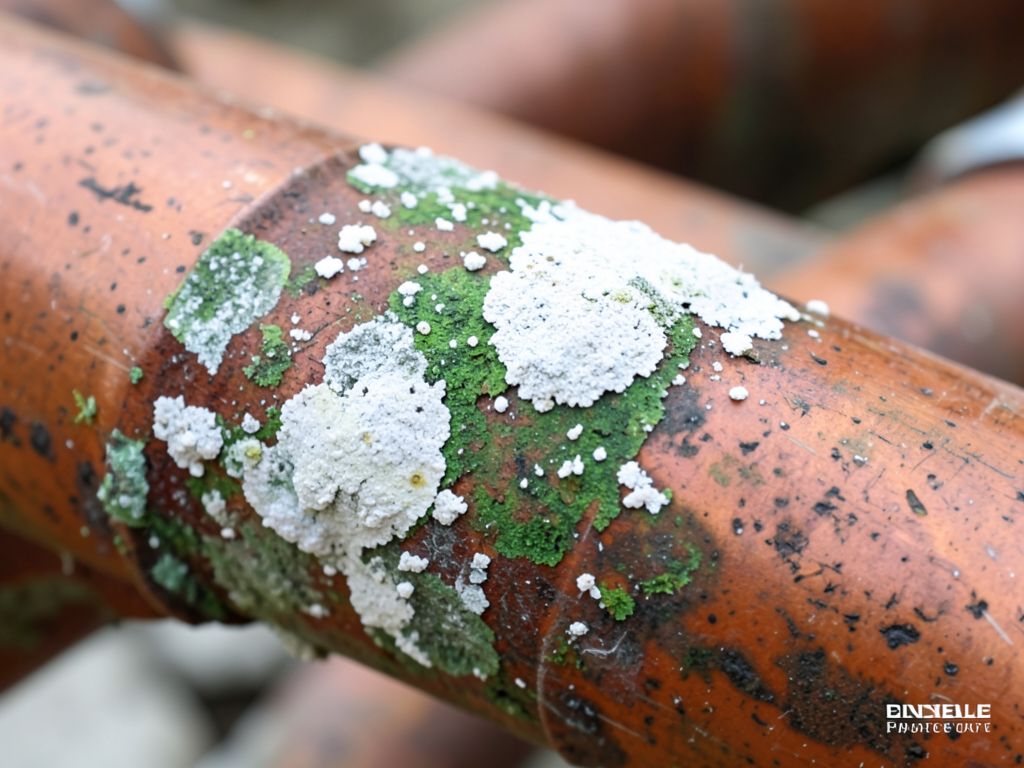
Close-up photo showing copper pipe corrosion with white mineral deposits and green oxidation typical of Salt Lake City’s hard water conditions.
Salt Lake City’s Hard Water Impact on Pipe Materials
Salt Lake County’s water contains high levels of calcium and magnesium. These minerals deposit inside pipes as scale, reducing water flow and creating pressure problems. In copper pipes, this scale can actually protect against pinhole leaks by creating a barrier between the water and pipe walls.
PEX handles hard water differently. The smooth interior surface resists scale adhesion, maintaining water flow over decades. However, PEX cannot handle extremely high water temperatures as well as copper, making it less ideal for recirculation systems.
Chloramine treatment in Salt Lake City’s municipal water supply affects both materials. Copper develops a protective patina that slows corrosion, while PEX requires specific chlorine-resistant formulations for long-term reliability.
Golden Nugget: The Jordan Valley Water Conservancy District reports that homes with copper pipes in areas with water hardness above 10 grains per gallon experience 30% more pinhole leaks than homes in softer water regions.
Freeze-Thaw Performance in Utah Winters
Utah’s freeze-thaw cycles create unique plumbing challenges. When temperatures fluctuate between 20°F and 40°F, water in pipes expands and contracts repeatedly. Copper pipes crack under this stress, while PEX stretches slightly and returns to shape.
Testing shows PEX-B withstands freeze expansion up to 500 PSI before bursting, compared to copper’s failure at 200-300 PSI. This difference matters in older Salt Lake City homes where insulation may be inadequate or pipes run through exterior walls.
However, neither material survives prolonged freezing without damage. Plumbers responding to burst pipe emergencies in Bountiful and North Salt Lake find that proper insulation matters more than pipe material choice.
Golden Nugget: The Utah Uniform Building Code Section 305.4 requires exterior water pipes in unheated spaces to be protected with insulation rated for local climate zone 5B, regardless of pipe material.
Photo of a plumber installing PEX piping in a crawl space, showing the flexible tubing’s ability to bend around obstacles without fittings.
Cost Comparison: Installation and Long-Term Value
Material costs drive the initial price difference. PEX tubing costs $0.50-$2.00 per foot depending on diameter and quality grade. Copper Type L costs $2.50-$4.00 per foot, while Type M runs $1.50-$3.00 per foot.
Labor rates in Salt Lake County average $85-$125 per hour for licensed plumbers. PEX installation requires crimping tools and basic fittings, while copper needs soldering equipment and more skilled labor for leak-free joints.
Long-term costs vary by material. Copper pipes rarely need replacement but may require repairs for pinhole leaks. PEX typically lasts the life of the home but cannot be repaired if damaged by UV exposure or chemical contamination.
Resale value impacts differ. Copper pipes can increase home value by $1,000-$2,000 in older neighborhoods where buyers expect premium materials. PEX offers no direct value increase but may appeal to buyers seeking modern, energy-efficient systems.
Historic Salt Lake City Homes: Special Considerations
Bungalows in The Avenues and Sugar House built before 1960 often contain galvanized steel or lead service lines. Replacing these with modern materials requires careful planning to preserve historic character while meeting current code requirements.
Copper works well in these homes since it matches the original era’s materials and maintains authenticity. However, the hard water in these established neighborhoods accelerates copper corrosion, potentially requiring more frequent maintenance.
PEX offers advantages for historic home retrofits. Its flexibility allows installation through existing wall cavities without demolition, preserving original plaster and woodwork. Many preservation-minded homeowners choose PEX specifically to minimize structural impact.
Golden Nugget: Salt Lake City’s historic preservation guidelines allow PEX installation in visible locations if properly secured and painted to match existing trim, making it acceptable for many Avenues and Capitol Hill renovations.
Building Code Requirements for SLC Plumbing
Utah’s Uniform Plumbing Code governs all residential plumbing installations. Both PEX and copper must meet NSF/ANSI Standard 61 for drinking water safety. Local jurisdictions may have additional requirements for specific applications. NSF/ANSI Standard 61 certification.
Salt Lake City requires permits for any pipe replacement exceeding 10 linear feet. The inspection process verifies proper support spacing, expansion loops for PEX, and correct soldering techniques for copper joints.
Commercial properties face stricter requirements. Restaurants in North Salt Lake must use copper for grease lines due to fire code requirements, while residential garages can use PEX for laundry hookups.
Golden Nugget: Salt Lake County Health Department regulations require all residential water service lines within 10 feet of electrical service to use non-conductive PEX to prevent galvanic corrosion.
Making the Right Choice for Your SLC Home
Consider your specific situation when choosing pipe materials. New construction in Daybreak or Herriman favors PEX for cost savings and freeze resistance. Established neighborhoods like Millcreek may benefit from copper’s proven longevity.
Climate exposure matters significantly. Homes in areas with extreme temperature swings, like the benches above Salt Lake City, should prioritize PEX’s freeze resistance. Properties near the Great Salt Lake with high humidity may prefer copper’s UV resistance.
Future plans influence the decision. If you plan to sell within five years, copper may provide better return on investment. For long-term ownership, PEX’s lower maintenance requirements often outweigh copper’s durability advantages.
Call (385) 406-8899 today to schedule your inspection. Our licensed plumbers will evaluate your specific needs and provide a detailed quote for either PEX or copper installation, ensuring you make the best choice for your Salt Lake City home.
Frequently Asked Questions
Which pipe material lasts longer in Salt Lake City’s climate?
Copper typically lasts 50-70 years in SLC’s climate, while PEX lasts 30-50 years. However, PEX’s freeze resistance often prevents the catastrophic failures that can end copper pipes’ useful life prematurely in our extreme temperature conditions.
Does hard water affect PEX and copper differently?
Yes. Hard water causes scale buildup in copper pipes, potentially reducing water flow but also protecting against pinhole leaks. PEX resists scale adhesion but cannot develop the protective mineral layer that sometimes extends copper’s lifespan in hard water areas.
Are permits required for pipe replacement in Salt Lake County?
Permits are required for any replacement exceeding 10 linear feet of pipe. Both PEX and copper installations must pass inspection for proper support, expansion allowances, and connection quality. The process ensures code compliance and protects your investment.
Can I mix PEX and copper in the same home?
Absolutely. Many Salt Lake City homes use copper for main supply lines and PEX for branch lines or remodeling projects. The materials connect using approved transition fittings, allowing you to choose the best option for each application.
What’s the typical cost difference between PEX and copper installation?
PEX installation costs 40-50% less than copper in Salt Lake County. A typical 2,000-square-foot home repipe costs $4,500-$6,500 with PEX versus $8,000-$12,000 for copper, including materials and labor.
Still unsure which material is right for your home? Pick up the phone and call (385) 406-8899 before the next storm hits. Our SLC plumbing experts will help you make the right choice for your specific situation and budget. Expert Drain Cleaning in Sandy UT for Stubborn Clogs.
You may also find this helpful. Adding a Bathroom to Your Basement Without Breaking the Concrete.
{
“@context”: “https://schema.org”,
“@type”: “BlogPosting”,
“headline”: “The Real Pros and Cons of PEX vs Copper Pipes for Salt Lake City Homes”,
“description”: “Compare PEX and copper plumbing for Salt Lake City homes. Learn about hard water impact, freeze resistance, and local installation costs from SLC plumbing experts.”,
“wordCount”: 1653,
“datePublished”: “2026-03-21T12:25:00.000Z”,
“dateModified”: “2026-03-21T12:25:00.000Z”,
“inLanguage”: “en-US”,
“mainEntityOfPage”: {
“@type”: “WebPage”,
“@id”: “https://crestlineplumbingsaltlakecity.com”
},
“publisher”: {
“@type”: “LocalBusiness”,
“name”: “Crestline Plumbing Salt Lake City”,
“url”: “https://crestlineplumbingsaltlakecity.com”
},
“author”: {
“@type”: “Organization”,
“name”: “Crestline Plumbing Salt Lake City”,
“url”: “https://crestlineplumbingsaltlakecity.com”
},
“image”: {
“@type”: “ImageObject”,
“url”: “https://crestlineplumbingsaltlakecity.com/wp-content/uploads/2026/03/the-real-pros-and-cons-of-pex-vs-copper-pipes-for-1.png”
}
}
{
“@context”: “https://schema.org”,
“@type”: “Plumber”,
“name”: “Crestline Plumbing Salt Lake City”,
“url”: “https://crestlineplumbingsaltlakecity.com”,
“address”: {
“@type”: “PostalAddress”,
“addressLocality”: “Salt Lake City”
},
“areaServed”: {
“@type”: “City”,
“name”: “Salt Lake City”
}
}
{
“@context”: “https://schema.org”,
“@type”: “FAQPage”,
“mainEntity”: [
{
“@type”: “Question”,
“name”: “Which pipe material lasts longer in Salt Lake City’s climate?”,
“acceptedAnswer”: {
“@type”: “Answer”,
“text”: “Copper typically lasts 50-70 years in SLC’s climate, while PEX lasts 30-50 years. However, PEX’s freeze resistance often prevents the catastrophic failures that can end copper pipes’ useful life prematurely in our extreme temperature conditions.”
}
},
{
“@type”: “Question”,
“name”: “Does hard water affect PEX and copper differently?”,
“acceptedAnswer”: {
“@type”: “Answer”,
“text”: “Yes. Hard water causes scale buildup in copper pipes, potentially reducing water flow but also protecting against pinhole leaks. PEX resists scale adhesion but cannot develop the protective mineral layer that sometimes extends copper’s lifespan in hard water areas.”
}
},
{
“@type”: “Question”,
“name”: “Are permits required for pipe replacement in Salt Lake County?”,
“acceptedAnswer”: {
“@type”: “Answer”,
“text”: “Permits are required for any replacement exceeding 10 linear feet of pipe. Both PEX and copper installations must pass inspection for proper support, expansion allowances, and connection quality. The process ensures code compliance and protects your investment.”
}
},
{
“@type”: “Question”,
“name”: “Can I mix PEX and copper in the same home?”,
“acceptedAnswer”: {
“@type”: “Answer”,
“text”: “Absolutely. Many Salt Lake City homes use copper for main supply lines and PEX for branch lines or remodeling projects. The materials connect using approved transition fittings, allowing you to choose the best option for each application.”
}
},
{
“@type”: “Question”,
“name”: “What’s the typical cost difference between PEX and copper installation?”,
“acceptedAnswer”: {
“@type”: “Answer”,
“text”: “PEX installation costs 40-50% less than copper in Salt Lake County. A typical 2,000-square-foot home repipe costs $4,500-$6,500 with PEX versus $8,000-$12,000 for copper, including materials and labor.”
}
}
]
}
{
“@context”: “https://schema.org”,
“@type”: “BreadcrumbList”,
“itemListElement”: [
{
“@type”: “ListItem”,
“position”: 1,
“name”: “Home”,
“item”: “https://crestlineplumbingsaltlakecity.com”
},
{
“@type”: “ListItem”,
“position”: 2,
“name”: “Blog”,
“item”: “https://crestlineplumbingsaltlakecity.com/blog”
},
{
“@type”: “ListItem”,
“position”: 3,
“name”: “The Real Pros and Cons of PEX vs Copper Pipes for Salt Lake City Homes”
}
]
}
{
“@context”: “https://schema.org”,
“@type”: “Service”,
“serviceType”: “Plumbing”,
“provider”: {
“@type”: “LocalBusiness”,
“name”: “Crestline Plumbing Salt Lake City”,
“url”: “https://crestlineplumbingsaltlakecity.com”
},
“areaServed”: {
“@type”: “City”,
“name”: “Salt Lake City”
},
“description”: “Compare PEX and copper plumbing for Salt Lake City homes. Learn about hard water impact, freeze resistance, and local installation costs from SLC plumbing experts.”
}