
Why Your Capitol Hill Historic Home Needs a Specialized Water Pressure Regulator
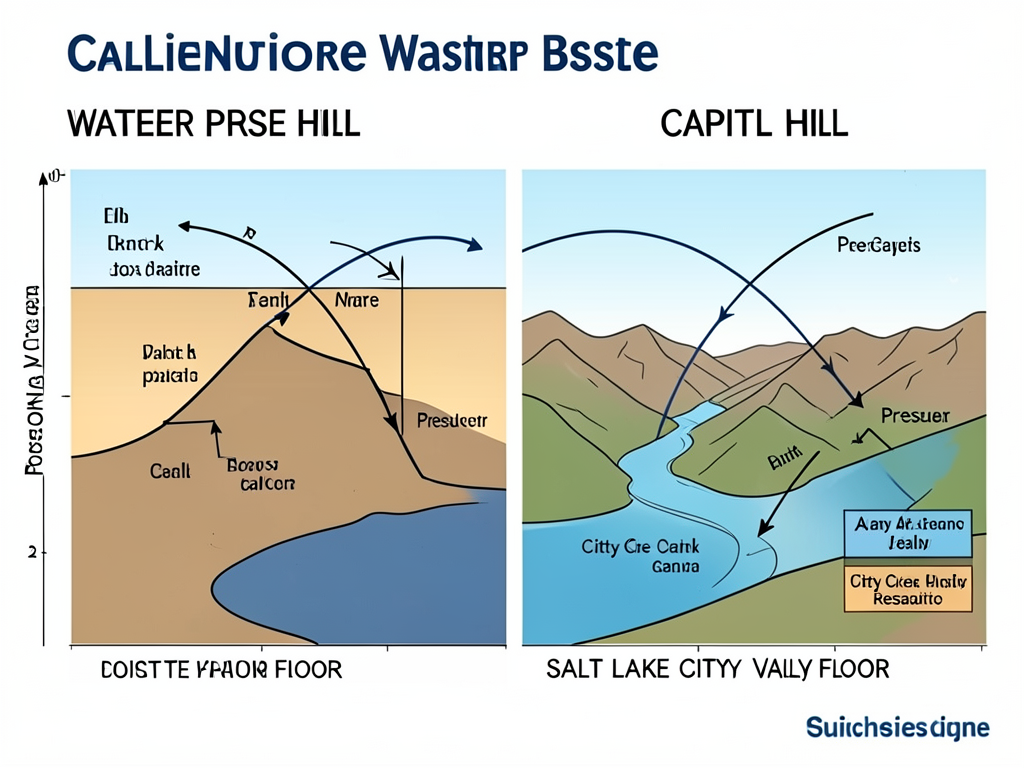
Capitol Hill’s steep elevation above Salt Lake City’s valley floor creates unique plumbing challenges that many homeowners don’t realize until it’s too late. The neighborhood’s position on the bench means water travels downhill from City Creek Canyon reservoirs through a gravity-fed system, building pressure as it descends. While this delivers strong flow to hilltop homes, it often creates dangerous conditions for the aging pipes and fixtures common in Capitol Hill’s historic bungalows and craftsman homes. If you live near the State Capitol building or along 300 North, your home likely experiences water pressure that exceeds safe residential limits. Salt Lake City Department of Public Utilities.
Most household appliances and plumbing systems are designed to operate between 40-80 PSI. In Capitol Hill, many homes regularly see pressures of 90-120 PSI, with some areas near the Capitol District occasionally spiking above 130 PSI during peak demand. These elevated pressures don’t just waste water—they actively destroy plumbing infrastructure, water heaters, and expensive fixtures over time. The constant stress causes premature failure of everything from toilet fill valves to dishwasher inlet screens. Best Water Softener Installation Services in Salt Lake City to Fight Hard Water.
The good news is that this problem has a proven solution. A properly sized and installed pressure reducing valve (PRV) can bring your home’s water pressure down to safe levels, protecting your investment and preventing costly emergency repairs. However, Capitol Hill’s unique elevation profile means a standard PRV setup often isn’t enough—you need a system designed specifically for the neighborhood’s pressure characteristics. Water Main Leak Detection and Repair in Holladay.
Understanding the signs of high pressure and the risks of ignoring them is the first step toward protecting your Capitol Hill home. From the distinctive sounds of water hammer to the premature failure of water heaters, the symptoms are often right in front of you but easy to misinterpret. Let’s examine why Capitol Hill experiences these pressure issues and what you can do about them.

Why Capitol Hill Experiences High Water Pressure
The elevation difference between Capitol Hill and Salt Lake City’s water treatment facilities creates the fundamental pressure problem. Water stored in City Creek Canyon sits at approximately 5,500 feet elevation, while Capitol Hill homes range from 4,600 to 4,800 feet. This 700-900 foot elevation drop translates directly into pressure gain—roughly 30-40 PSI from elevation alone, even before accounting for the city’s pumping systems.
The Salt Lake City Department of Public Utilities operates a complex network of reservoirs and pressure zones throughout the valley. Capitol Hill falls within what’s called the “high zone” of the system, where water pressure is intentionally maintained at higher levels to ensure adequate flow for fire protection and multi-story buildings. While this makes sense for the Utah State Capitol building or the University of Utah hospital complex, it creates excessive pressure for the typical single-family home.
Historic Capitol Hill homes built before 1970 often have galvanized steel pipes that are particularly vulnerable to high pressure. These pipes already suffer from internal corrosion and reduced diameter from mineral buildup. When you add 100+ PSI of external pressure, the combination accelerates failure dramatically. The constant stress causes pipe joints to loosen, creates pinhole leaks in weakened sections, and makes the entire system more susceptible to catastrophic bursts.
Modern homes in Capitol Hill with copper or PEX piping are somewhat more resilient, but they’re not immune. Even newer materials have pressure ratings that can be exceeded by the neighborhood’s typical water pressure. The constant high pressure also affects every fixture and appliance, causing wear that wouldn’t occur under normal conditions.
Signs Your Capitol Hill Home Has Excessive Water Pressure
High water pressure announces itself through several distinctive symptoms that many homeowners mistake for normal wear and tear. The most obvious is water hammer—that loud banging or knocking sound when you shut off a faucet or when your washing machine stops filling. This occurs because the high-pressure water suddenly stops moving, creating a shock wave that travels through your pipes. In Capitol Hill homes, this sound is often more pronounced due to the higher baseline pressure.
Another clear indicator is the premature failure of plumbing fixtures. If you’re replacing toilet fill valves, faucet cartridges, or pressure relief valves on your water heater every few years, high pressure is likely the culprit. These components are designed for normal residential pressure and simply can’t withstand the constant stress of 100+ PSI water. Reliable Plumbing Repair for Historic Homes in The Avenues.
Running toilets provide another diagnostic clue. When the fill valve can’t properly seal against high pressure, water slowly leaks past it into the bowl. This creates the characteristic sound of water running intermittently, even when no one has flushed recently. Many Capitol Hill homeowners report this issue despite having relatively new toilets.
Water heaters in high-pressure homes fail much sooner than their expected lifespan. The pressure relief valve on your water heater is designed as a safety feature, but it’s constantly under stress when system pressure is too high. Additionally, the thermal expansion that occurs when water heats up becomes more problematic at higher pressures, potentially causing the tank to over-pressurize.
Hidden leaks represent one of the most serious consequences of high pressure. Small pinhole leaks can develop in weakened pipe sections, causing water damage inside walls before you notice any symptoms. In Capitol Hill’s older homes with plaster walls, these leaks can cause significant damage before becoming visible on the surface.
The Risks of Ignoring High PSI in Your Historic Home
The financial risks of ignoring high water pressure extend far beyond increased water bills. A typical Capitol Hill home with 100+ PSI water pressure can waste 30-50 gallons of water per day through leaks and excess flow. Over a year, that’s enough water to fill a small swimming pool—money literally going down the drain. Expert Drain Cleaning in Sandy UT for Stubborn Clogs.
More concerning are the structural risks. High pressure accelerates pipe corrosion and joint failure, particularly in galvanized steel pipes common in homes built before 1970. When these pipes finally fail, they often do so catastrophically—a burst pipe can release hundreds of gallons per hour, causing extensive water damage to your home’s structure, electrical systems, and personal belongings.
Appliance damage represents another significant cost. Dishwashers, washing machines, and water heaters all have pressure ratings that are frequently exceeded in Capitol Hill homes. A water heater failure can cost $1,500-$3,000 to replace, while a dishwasher failure might cost $800-$1,500. These costs multiply when you factor in the damage caused by appliance failures, such as flooded laundry rooms or kitchen water damage. Draper Kitchen and Bathroom Remodeling Plumbing Experts.
Insurance complications add another layer of risk. Some insurance companies are becoming aware of the high-pressure issues in Capitol Hill and may adjust coverage or premiums accordingly. More importantly, if a burst pipe causes damage and the insurance investigation reveals that you ignored known high-pressure symptoms, your claim could be denied or your coverage could be canceled.
The environmental impact shouldn’t be overlooked either. Salt Lake City faces ongoing water conservation challenges, and the wasted water from high-pressure homes contributes to unnecessary strain on the municipal system. During drought years, this wasted water represents a significant environmental cost.
The Primary Solution: Pressure Reducing Valve Installation
A pressure reducing valve (PRV) is the most effective solution for Capitol Hill’s high-pressure problem. This device installs on your main water line where it enters your home, typically in the basement near where the water meter is located. The PRV contains an internal diaphragm that automatically adjusts to maintain a preset outlet pressure, regardless of the incoming pressure from the street.
For Capitol Hill homes, the ideal PRV setting is typically 60-65 PSI. This provides strong, reliable water flow for all household needs while staying well within the safe operating range for plumbing fixtures and appliances. The valve constantly monitors system pressure and makes micro-adjustments throughout the day to maintain this consistent output.
Installation requires careful consideration of several factors specific to Capitol Hill homes. The elevation means your PRV needs to be sized appropriately for the high inlet pressure it will encounter. A valve rated for 300 PSI inlet pressure is recommended, even though typical residential PRVs are often rated for 200 PSI. This extra capacity ensures reliable operation and longer service life.
The location of the PRV installation is also critical. In Capitol Hill’s older homes, the main water line often enters through the basement foundation wall. The PRV should be installed as close to this entry point as possible, with adequate support and protection from freezing temperatures. Some homes may require additional plumbing modifications to create a suitable installation location.
Cost considerations for PRV installation in Capitol Hill typically range from $800-$1,500, depending on the complexity of your plumbing system and whether any modifications are needed. This investment pays for itself through water savings, prevented damage, and extended appliance life within 2-3 years for most homes.
Thermal Expansion Tanks: The Critical Companion to Your PRV
When you install a pressure reducing valve, you create a closed system in your home. This is because PRVs include a check valve that prevents water from flowing back into the city main. While this protects the city’s water supply, it creates a new problem: thermal expansion.
As water heats in your water heater, it expands. In an open system, this expansion simply pushes back into the city main. But in a closed system with a PRV, the expanded water has nowhere to go. This can cause dangerous pressure spikes that can damage your water heater, plumbing fixtures, and even cause the pressure relief valve to discharge periodically.
A thermal expansion tank solves this problem. This small tank installs on your cold water line near the water heater and contains a bladder that absorbs the expanded water volume. When water heats and expands, it flows into the expansion tank rather than creating dangerous pressure in your pipes.
For Capitol Hill homes, a thermal expansion tank is not optional—it’s required by the International Plumbing Code when a PRV is installed. The tank should be sized according to your water heater capacity, with most homes needing a 2-4 gallon tank. The cost to add this component is typically $200-$400, making the complete PRV system investment $1,000-$1,900. International Plumbing Code thermal expansion requirements.
Without an expansion tank, your PRV installation could create new problems even as it solves the high-pressure issue. The combination of PRV and expansion tank creates a complete, code-compliant solution that protects your entire plumbing system.
SLC Department of Public Utilities: What They Control vs. What You Own
Understanding the division of responsibility between the city and homeowners is crucial for Capitol Hill residents dealing with water pressure issues. The Salt Lake City Department of Public Utilities maintains the water main and all infrastructure up to your water meter. This includes the city shut-off valve, the water meter itself, and the pipe running from the main to your property line.
Everything on the house side of the water meter is your responsibility as the homeowner. This includes the pipe from the meter to your home, all indoor plumbing, and any pressure reducing valves you choose to install. The city will not install a PRV for you, nor will they adjust the pressure coming into your home.
The city does offer a pressure test service if you suspect your home has high pressure. A technician can come to your home and measure the water pressure at your hose bib or other accessible location. In Capitol Hill, these tests almost always confirm pressures above 80 PSI, with many readings in the 90-110 PSI range.
If you experience a pressure surge or sudden change in water pressure, the SLC Department of Public Utilities has a 24/7 emergency line at (801) 483-6700. While they won’t adjust your home’s pressure, they can check for issues on the city side that might be affecting your service, such as a malfunctioning pressure reducing station or a break in a nearby water main.
For planned water system work that might affect your pressure, the city typically provides 48-hour notice to affected residents. This is important because pressure fluctuations during maintenance can stress your plumbing system, especially if you don’t have a PRV installed.
DIY Pressure Testing: How to Verify Your Home’s PSI
Before investing in a pressure reducing valve, you can verify whether your Capitol Hill home actually has high water pressure. This simple test takes about 15 minutes and requires only a water pressure gauge, which you can purchase at any hardware store for $10-$20.
Start by locating an outdoor hose bib or an indoor faucet with a threaded spout. Make sure no water is being used anywhere in your home—turn off all faucets, stop the dishwasher and washing machine, and ensure no toilets are filling. This ensures you’re measuring static pressure, not pressure with water flowing.
Attach the pressure gauge to the hose bib or faucet and open the valve fully. The gauge will show your home’s water pressure in PSI. For accurate results, take readings at different times of day—morning, afternoon, and evening—since pressure can vary based on neighborhood demand.
Normal residential pressure is 40-80 PSI. If your readings consistently show 80+ PSI, you have high water pressure that warrants a PRV installation. Readings of 90+ PSI indicate severe high pressure that should be addressed immediately to prevent damage.
Some hardware stores rent more sophisticated pressure testing equipment that can record pressure over 24-48 hours. This data-logging approach is particularly useful in Capitol Hill because it captures pressure fluctuations that might not be apparent during a single test. These fluctuations are common in the neighborhood due to the elevation-based pressure system.
If you’re uncomfortable performing this test yourself, many plumbing companies offer free pressure testing as part of their initial consultation. This service typically takes 10-15 minutes and provides you with documented proof of your home’s pressure conditions.
Maintenance and Lifespan of Your Pressure Reducing Valve
A quality pressure reducing valve typically lasts 10-15 years in normal conditions, but Capitol Hill’s high inlet pressure can reduce this lifespan to 7-10 years. Understanding the signs of PRV failure helps you address problems before they cause damage.
The most common failure mode is a stuck or frozen adjustment mechanism. Over time, sediment and mineral deposits can prevent the valve from maintaining the correct outlet pressure. You might notice pressure creeping up over several months, or the valve might fail completely and allow full street pressure into your home.
Another failure pattern involves the internal diaphragm wearing out. This usually causes pressure to drop below the desired setting, resulting in weak water flow throughout your home. While less immediately damaging than high pressure, low pressure makes everyday tasks frustrating and can indicate the valve is nearing complete failure.
Annual maintenance can extend your PRV’s life significantly. This includes checking the pressure setting with a gauge, exercising the adjustment mechanism to prevent sticking, and flushing the valve to remove sediment. Many Capitol Hill homeowners include this service with their annual plumbing inspection.
When replacement becomes necessary, the process is straightforward for a professional plumber. The water main is shut off, the old valve is removed, and the new valve is installed with proper support and connections. The system is then tested to ensure it’s maintaining the correct pressure.
Some homeowners opt for a maintenance plan that includes annual PRV testing and adjustment. This proactive approach prevents the gradual pressure creep that often occurs over time and ensures your system continues protecting your home year after year.
Special Considerations for Capitol Hill’s Historic Homes
Capitol Hill’s historic homes, many built between 1900 and 1940, present unique challenges for pressure reducing valve installation. These homes often have plaster walls, original woodwork, and finished basements that require careful work to avoid damage during installation.
Galvanized steel pipes, common in homes built before 1960, require special consideration. These pipes are often corroded internally and may be close to failure even without high pressure. When installing a PRV on a system with old galvanized pipes, it’s often wise to budget for potential repairs or replacements of the most compromised sections.
Many historic Capitol Hill homes have architectural features that affect plumbing layout. Exposed pipes in basements, original valve configurations, and unusual routing can make installation more complex. A plumber experienced with historic homes understands how to work within these constraints while maintaining the home’s character.
Water hammer arrestors are particularly important in historic homes. These small devices absorb the shock of sudden water pressure changes, preventing the banging sounds that can loosen old pipe joints and damage antique fixtures. They should be installed in addition to the main PRV for maximum protection.
Some historic districts have specific requirements about exterior modifications. While PRV installation is typically internal work that doesn’t require historic district approval, it’s worth checking local guidelines if your home is in a designated historic area.
The investment in proper PRV installation for a historic home often pays dividends beyond just pressure protection. Many homeowners find that addressing the high-pressure issue reveals other plumbing problems that, when corrected, improve the home’s overall water efficiency and reliability.
Cost-Benefit Analysis: Is a PRV Worth It for Your Capitol Hill Home?
The financial case for installing a pressure reducing valve in Capitol Hill is compelling when you consider all the costs high pressure creates. Let’s break down the typical expenses and savings over a 10-year period.
Installation costs range from $1,000-$2,000 for a complete system with PRV and thermal expansion tank. This includes labor, materials, and any necessary plumbing modifications. While this seems like a significant upfront investment, the savings accumulate quickly.
Water savings from eliminating leaks and excess flow typically amount to 20-30% of your water bill. For a typical Capitol Hill household spending $600-$800 annually on water, this translates to $120-$240 in annual savings. Over 10 years, that’s $1,200-$2,400 in water cost reductions.
Appliance longevity improvements are harder to quantify but equally important. A water heater that might fail in 8 years at high pressure could last 12-15 years with proper pressure. That’s potentially $1,500-$3,000 in avoided replacement costs. Dishwashers, washing machines, and other appliances also benefit from reduced pressure, extending their useful life by several years.
Perhaps most importantly, a PRV prevents the catastrophic water damage that can result from pipe failures. A single burst pipe incident can cost $5,000-$20,000 in repairs, depending on the extent of the damage. The PRV essentially provides insurance against these expensive emergencies.
When you total these factors, the return on investment for a PRV installation in Capitol Hill typically occurs within 3-5 years. After that point, the system continues generating savings and preventing problems for its entire service life.
Beyond the pure financial calculation, there’s the peace of mind factor. Knowing that your plumbing system is protected from the excessive pressures common in Capitol Hill eliminates a significant source of homeowner anxiety and potential emergency repairs.
Frequently Asked Questions
How do I know if my Capitol Hill home has high water pressure?
You can test your water pressure with a simple gauge from a hardware store. Attach it to an outdoor hose bib or threaded faucet, ensure no water is being used in your home, and read the PSI. Capitol Hill homes typically show 90-120 PSI, well above the safe 40-80 PSI range. If you’re unsure, a plumber can perform a professional pressure test.
Will a pressure reducing valve affect my water pressure for showers and appliances?
No, a properly sized PRV set to 60-65 PSI provides excellent water pressure for all household needs. You’ll still have strong, satisfying showers and your appliances will function perfectly. The difference is that this pressure is safe and won’t damage your plumbing system over time.
How long does a pressure reducing valve last in Capitol Hill’s conditions?
In Capitol Hill’s high-pressure environment, a quality PRV typically lasts 7-10 years. Annual maintenance can extend this to the full 10-15 year lifespan. Signs of failure include gradually increasing water pressure, unusual noises in your plumbing, or the valve becoming difficult to adjust.
Is a thermal expansion tank really necessary with a PRV?
Yes, absolutely. When you install a PRV, you create a closed system that traps thermal expansion from your water heater. Without an expansion tank, this can cause dangerous pressure spikes that damage your plumbing and water heater. The International Plumbing Code requires an expansion tank when a PRV is installed.
Can I install a pressure reducing valve myself?
While technically possible, PRV installation requires knowledge of local plumbing codes, proper sizing for your home’s specific conditions, and correct integration with your existing plumbing. Improper installation can create more problems than it solves. Professional installation ensures the system works correctly and meets all code requirements.
How much does PRV installation cost in Capitol Hill?
Complete PRV installation with thermal expansion tank typically costs $1,000-$2,000 in Capitol Hill. This includes the equipment, labor, and any necessary plumbing modifications. The investment pays for itself within 3-5 years through water savings, prevented damage, and extended appliance life.
Will the city adjust my water pressure if it’s too high?
No, the Salt Lake City Department of Public Utilities maintains system pressure for the entire neighborhood based on elevation and fire protection requirements. They won’t adjust pressure for individual homes. Installing a PRV on your property is the homeowner’s responsibility and the only way to reduce high incoming pressure.
What happens if I ignore high water pressure in my historic Capitol Hill home?
Ignoring high pressure leads to premature plumbing fixture failure, appliance damage, hidden leaks, and eventually catastrophic pipe bursts. In historic homes with old pipes, this can mean extensive water damage to irreplaceable architectural features. The longer you wait, the more expensive the eventual repairs become.
Protect Your Capitol Hill Home Today
High water pressure is a silent destroyer working 24/7 in your Capitol Hill home. Every day you wait, you’re risking expensive damage to your plumbing, appliances, and potentially your home’s structure. The solution is straightforward: a properly sized pressure reducing valve with thermal expansion tank installation.
Don’t wait for a pipe to burst or a water heater to fail catastrophically. The cost of prevention is a fraction of the cost of emergency repairs. Our team understands Capitol Hill’s unique elevation challenges and has installed hundreds of PRV systems specifically designed for the neighborhood’s pressure conditions.
Call (385) 406-8899 today to schedule your free pressure test and consultation. We’ll measure your home’s exact PSI, explain your options, and provide a clear quote for installation. Our work is guaranteed, code-compliant, and backed by years of experience serving Capitol Hill’s historic homes.
Pick up the phone and call (385) 406-8899 before the next pressure surge damages your home. Your plumbing system will thank you, and you’ll enjoy the peace of mind that comes with knowing your Capitol Hill home is protected from excessive water pressure.