
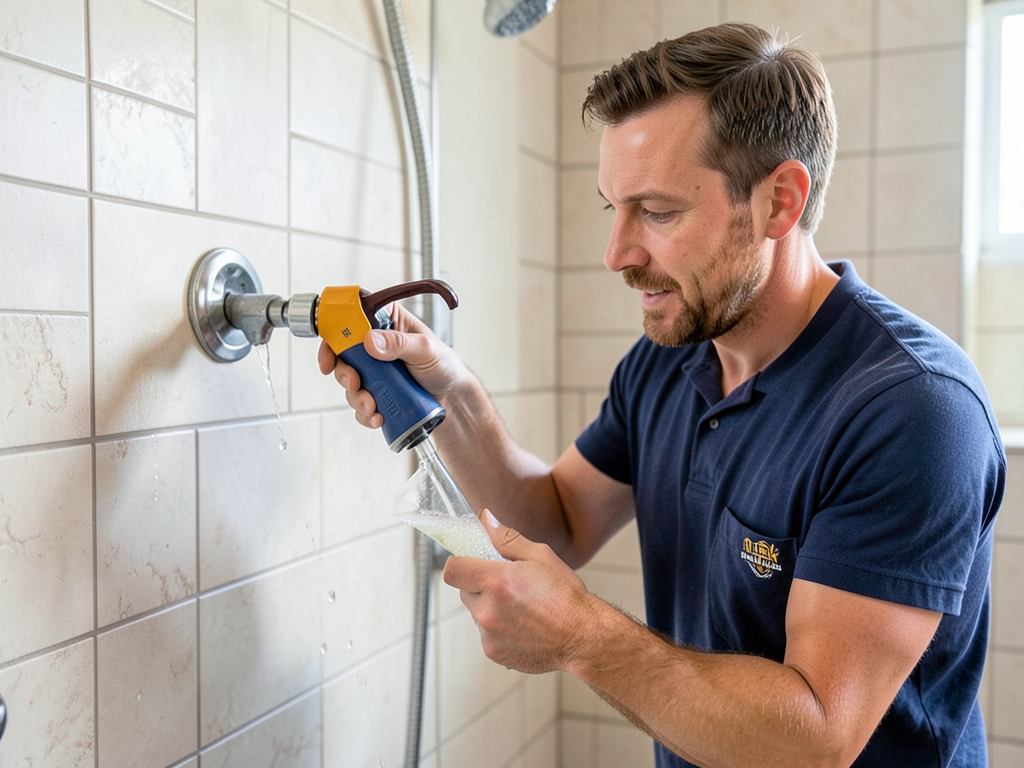
Removing White Crusty Buildup from Your Showerheads and Faucets
White crusty buildup on your showerheads and faucets isn’t just an eyesore—it’s a sign of hard water mineral deposits that can reduce water pressure and shorten the life of your fixtures. If you live in Salt Lake City, you’re dealing with some of the hardest water in the country, with mineral content ranging from 12 to 25 grains per gallon. That white crusty buildup is primarily calcium carbonate and magnesium deposits that form when hard water evaporates, leaving behind these stubborn minerals that clog nozzles and reduce water flow. Best Water Softener Installation Services in Salt Lake City to Fight Hard Water.
The good news is that you can remove most mineral buildup yourself with common household items. White vinegar’s acetic acid dissolves calcium carbonate through a simple chemical reaction, breaking down the deposits without harsh chemicals. This guide walks you through safe, effective methods to restore your fixtures to like-new condition and explains when it’s time to call in a professional plumber.. Read more about Whole House Water Filtration Installation for Centerville Homes.
Why Salt Lake City Water Causes Rapid Scaling
Understanding your enemy is the first step to victory. Salt Lake City’s water comes from mountain snowpack in the Wasatch Range, which naturally picks up minerals as it flows through limestone and other rock formations. By the time this water reaches your home, it’s loaded with dissolved calcium and magnesium that create those white crusty deposits. Water Main Leak Detection and Repair in Holladay.
The Salt Lake City Department of Public Utilities reports that our area’s water hardness consistently tests between 12-25 GPG, which is considered very hard. This means that for every gallon of water, you’re dealing with 12 to 25 grains of mineral content. To put that in perspective, water is considered hard at just 7 GPG. EPA.
Local plumbers in neighborhoods like The Avenues and Sugar House report that they see mineral buildup forming within months of new fixture installation, while areas with softer water might go years before seeing similar issues. The freeze-thaw cycles common in our climate also cause pipes to expand and contract, creating tiny cracks where minerals can accumulate even faster. Water Stains on Ceiling or Walls.
Pro Tip: If you notice white crusty buildup forming within six months of installing new fixtures, you’re dealing with extremely hard water that will require more aggressive treatment than simple cleaning.
Tools and Materials Needed
Before you start, gather these supplies. You probably have most of them already, and they’re much cheaper than replacing your fixtures:
- Distilled white vinegar (5% acidity)
- Plastic baggie large enough to fit over your showerhead
- Rubber bands or zip ties
- Old toothbrush or soft-bristled brush
- Wrench (adjustable works best)
- Microfiber cloth
- Teflon tape (thread seal tape)
- Small bowl for soaking parts
Optional but helpful:
- Rubber gloves
- Safety glasses
- Plastic scraper
Avoid using metal tools on chrome or brushed finishes as they can scratch the surface. The vinegar smell will dissipate within a few hours after cleaning.
Method 1: The ‘No-Removal’ Soak (Best for Light Buildup)
This method works great for showerheads that are still attached to the wall and have light to moderate buildup. It’s the quickest and requires no plumbing knowledge. Reliable Plumbing Repair for Historic Homes in The Avenues.
- Prepare the Vinegar Bath
Fill a plastic baggie about halfway with white vinegar. You need enough to fully submerge the showerhead face.
- Attach the Bag
Carefully place the bag over the showerhead, ensuring all nozzles are submerged in vinegar. Use rubber bands or zip ties to secure the bag tightly around the shower arm. Make sure there are no leaks.
- Soak Time
Let the showerhead soak for at least 30 minutes. For heavy buildup, you can leave it for up to 8 hours. Don’t exceed 8 hours on chrome finishes as prolonged vinegar exposure can damage the finish.
- Remove and Scrub
Remove the bag carefully. Use an old toothbrush to scrub the nozzles and faceplate. You’ll see the white deposits coming off as you brush.
- Rinse Thoroughly
Turn on the shower to full hot water and let it run for 2-3 minutes to flush out any remaining vinegar and loosened deposits.
Before and After Photo: Show a showerhead with visible white crusty buildup on the left, and the same showerhead sparkling clean on the right after vinegar treatment.
Method 2: Deep Cleaning (Best for Stubborn Clogs)
When mineral buildup is severe or you’re dealing with reduced water pressure throughout the house, you need to remove the showerhead for a thorough cleaning. This method also lets you clean the internal filter screen that traps debris.
- Turn Off Water Supply
Locate the shut-off valve for your shower. If you can’t find it, you may need to turn off the main water supply to your home.
- Remove the Showerhead
Wrap the shower arm with a cloth to protect the finish. Use an adjustable wrench to turn the showerhead counterclockwise. Most showerheads loosen with moderate pressure. If it’s stuck, apply penetrating oil and wait 15 minutes.
- Disassemble Components
Once removed, take apart the showerhead. Look for a small filter screen at the connection point—this often traps mineral deposits and debris. Remove any rubber washers or O-rings and set them aside.
- Soak All Parts
Place all metal parts in a bowl of vinegar. Let them soak for 2-4 hours. For plastic parts, limit soaking to 30 minutes to prevent damage.
- Clean the Filter Screen
Use a toothbrush to scrub the filter screen thoroughly. Mineral deposits here are often the cause of reduced water pressure. Rinse under running water.
- Clear the Nozzles
Use a toothpick or straightened paperclip to gently clear each nozzle. Don’t force anything—if a nozzle is completely blocked, it may need replacement.
- Reassemble and Reinstall
Wrap the shower arm threads with new Teflon tape in a clockwise direction. Reattach the showerhead and tighten by hand, then give it a quarter turn with the wrench.
Technical Diagram: Cross-section view showing showerhead components including the filter screen, flow restrictor, and nozzle layout.
Kitchen and Bathroom Faucet Cleaning
Faucets require a slightly different approach since you can’t bag them as easily. Here’s how to tackle crusty buildup on your sink fixtures:
- Remove the Aerator
Unscrew the small mesh screen at the tip of your faucet. Most aerators twist off by hand, but you may need pliers for stubborn ones. Wrap the aerator in cloth first to avoid scratches.
- Soak and Scrub
Soak the aerator in vinegar for 2 hours. Use a toothbrush to scrub away deposits. Pay special attention to the tiny holes in the aerator screen.
- Clean the Faucet Body
Soak a cloth in vinegar and wrap it around the faucet spout. Secure with a rubber band and let it sit for 30 minutes. This dissolves buildup inside the spout.
- Flush the Lines
After cleaning, remove the aerator and turn on the hot water full blast for 30 seconds to flush out any remaining debris.
- Reassemble
Put the aerator back on and hand-tighten. Don’t overtighten as this can crack the housing.
Pro Tip: If your faucet has a single-handle design with a cartridge inside, mineral buildup can affect the mixing valve. This requires professional cleaning or replacement.
When to Call a Professional
While most mineral buildup is a DIY project, certain situations require professional plumbing expertise. Here’s when to pick up the phone instead of the vinegar bottle: Expert Drain Cleaning in Sandy UT for Stubborn Clogs.
Low Water Pressure Throughout the House If cleaning one fixture doesn’t solve the problem and you’re experiencing reduced pressure at multiple fixtures, you may have pipe-scale buildup inside your plumbing system. This requires professional descaling equipment.
Corroded or Damaged Fixtures If you see green or blue-green deposits (copper corrosion) or rust stains, you’re dealing with more than just hard water. These indicate pipe corrosion that needs immediate attention.
Leaking Connections If you damage the shower arm threads while removing a stuck showerhead, you’ll need a professional to replace the arm and ensure proper sealing.
Complex Shower Systems Multi-function shower systems with body sprays, rainfall heads, and handheld units have internal components that require specialized knowledge to service properly.
Water Quality Issues If you notice a change in water taste, odor, or color along with mineral buildup, you may have other water quality issues that need testing and treatment.
Call (385) 406-8899 today if you’re experiencing any of these issues. Our licensed plumbers can diagnose whether you need simple cleaning or more comprehensive water treatment solutions.
Preventing Future Buildup
Cleaning your fixtures every few months is fine, but preventing mineral buildup altogether saves time and extends the life of your plumbing. Here are your best options for Salt Lake City homes:
Whole-Home Water Softeners
A water softener is the most effective long-term solution for hard water problems. These systems use ion exchange to remove calcium and magnesium before water enters your home.
How They Work: Water passes through a tank filled with resin beads that attract and hold hard minerals, exchanging them for sodium or potassium ions. The system regenerates automatically, flushing the collected minerals down the drain.
Cost Considerations: Initial installation typically ranges from $1,500 to $3,000 depending on your home’s size and water usage. Annual maintenance costs average $100-200 for salt or potassium and system checks.
ROI Calculation: Most homeowners recoup the investment within 3-5 years through extended appliance life, reduced soap usage, and lower energy bills from more efficient water heating.
Point-of-Use Filters
If a whole-home system isn’t in your budget, consider filters for specific fixtures:
- Showerhead filters attach directly to the shower arm and reduce chlorine and some minerals
- Faucet-mounted filters work well for drinking water and cooking
- Under-sink reverse osmosis systems provide the highest quality drinking water
Routine Maintenance Schedule
Even with prevention systems, some maintenance helps:
- Monthly: Quick vinegar wipe-down of visible fixtures
- Quarterly: Deep clean showerheads and faucet aerators
- Annually: Professional inspection of water heater and plumbing system
Comparison Table: Prevention Methods
| Method | Initial Cost | Effectiveness | Maintenance | Best For |
|---|---|---|---|---|
| Whole-Home Softener | $1,500-3,000 | Excellent | Monthly salt refill, annual service | Whole house protection |
| Showerhead Filter | $30-80 | Good | Replace every 6-12 months | Showers only |
| Faucet Filter | $20-50 | Fair | Replace every 2-3 months | Drinking water |
| Regular Cleaning | $0 | Poor | Monthly scrubbing | Minimal buildup |
Health and Safety Considerations
Beyond the cosmetic issues, mineral buildup can affect your health and home safety:
Bacterial Growth The nooks and crannies created by mineral deposits provide perfect hiding spots for bacteria, including Legionella, which causes Legionnaires’ disease. A study by the University of Utah found that showerheads with visible buildup harbored 10 times more bacteria than clean fixtures.
Skin and Hair Impact Hard water minerals can make skin feel dry and itchy and leave hair looking dull. The minerals interfere with soap’s ability to lather, leaving residue on your skin and in your hair.
Appliance Efficiency Scale buildup in water heaters reduces efficiency by up to 30%, according to the U.S. Department of Energy. This means higher energy bills and shorter appliance life.
EPA Guidelines While the EPA doesn’t regulate water hardness, they recommend treatment when hardness exceeds 7 GPG for household efficiency and comfort.
Safety Warning: Never mix vinegar with bleach or commercial drain cleaners. This creates toxic chlorine gas. Also, avoid using vinegar on natural stone surfaces like marble or granite as it can etch the finish.
Special Considerations for Different Fixture Finishes
Not all fixtures react the same way to cleaning methods. Here’s what you need to know about different finishes:
Chrome
Most durable and vinegar-safe. Can handle extended soaking but avoid abrasive scrubbers that can scratch the surface.
Brushed Nickel
Also vinegar-safe but shows water spots more readily. Dry thoroughly after cleaning to prevent new spots from forming.
Oil-Rubbed Bronze
Requires special care. Vinegar can damage the patina finish. Use only mild soap and water, or a specialized bronze cleaner.
Brass
Often has a protective lacquer coating. If the coating is intact, use only mild soap and water. If uncoated, vinegar is safe but can cause tarnishing over time.
Stainless Steel
Highly resistant to corrosion but shows fingerprints and water spots. Vinegar works well but always rinse and dry completely.
Quick Reference Chart: Chrome and brushed nickel fixtures can handle vinegar cleaning. Oil-rubbed bronze and lacquered brass require gentler methods.
Environmental Impact and Water Conservation
Hard water doesn’t just affect your fixtures—it impacts your entire home’s water efficiency:
Water Waste Scale buildup in pipes reduces water flow, causing you to run faucets longer to get adequate pressure. This wastes thousands of gallons annually.
Energy Consumption Water heaters with scale buildup use 20-30% more energy to heat the same amount of water, increasing your carbon footprint.
Chemical Usage Hard water requires more soap, detergent, and cleaning products to achieve the same results, increasing chemical discharge into the environment.
Appliance Lifespan Scale buildup shortens the life of water-using appliances, increasing landfill waste and the environmental impact of manufacturing replacements.
By addressing hard water issues, you’re not just improving your home’s function—you’re making an environmentally responsible choice.
Frequently Asked Questions
How often should I clean my showerhead to prevent buildup?
For Salt Lake City’s hard water, clean your showerhead every 3-4 months. If you notice reduced water pressure or visible white deposits sooner, clean it immediately. Homes with water softeners may only need annual cleaning.
Can I use something other than vinegar to clean mineral deposits?
Yes. Lemon juice works similarly to vinegar but has a more pleasant smell. Commercial descalers containing citric acid are also effective. For heavy-duty cleaning, products with sulfamic acid work well but require careful handling and proper ventilation.
Will cleaning my showerhead improve water pressure?
Often yes, especially if the reduced pressure is due to clogged nozzles. However, if you’re still experiencing low pressure after cleaning, the issue may be in your pipes or with your home’s water supply. Contact a plumber for a pressure test.
Is it safe to drink water with high mineral content?
Yes, hard water is safe to drink and can even provide beneficial minerals like calcium and magnesium. However, it can affect the taste and may cause digestive issues for some people. If you’re concerned about drinking water quality, consider a point-of-use filter for drinking water.
How do I know if I need a water softener?
Signs you need a water softener include: white crusty buildup on fixtures, spots on dishes after washing, dry skin and hair, reduced soap lather, and scale in your water heater. A water test can confirm your exact hardness level. Most Salt Lake City homes benefit from water softeners.
Final Call to Action: Don’t let mineral buildup damage your fixtures and plumbing. Whether you need help with stubborn clogs or want to explore water softening solutions for your Salt Lake City home, our experienced plumbers are ready to help. Call (385) 406-8899 today to schedule your consultation and take the first step toward cleaner, more efficient water in your home.
Remember, what starts as a simple white crusty buildup can lead to bigger plumbing problems if left untreated. Let our local experts help you protect your investment and enjoy better water quality throughout your home. For more information, visit CDC Legionella information.